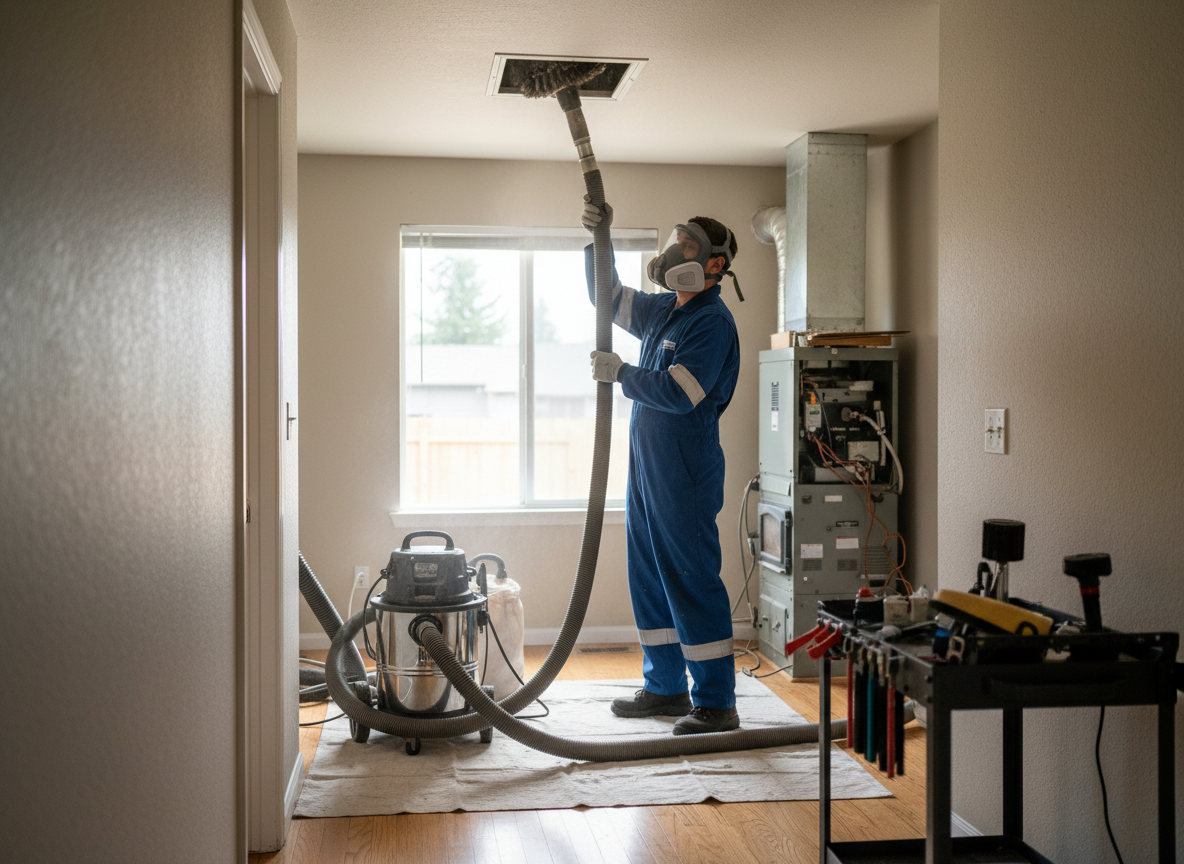
Gresham homes built before the 1980s in Rockwood and Downtown often have rigid metal ducts with unsealed joints that collect fine silt carried by winter floodwaters from the Sandy River drainage. When mild summers follow, trapped moisture promotes mold colonies that release spores into living spaces, directly feeding seasonal allergies. Technicians isolate each branch run, use negative-air machines rated for 2000 CFM, and agitate with forward-curved brushes sized to the duct diameter so loosened debris travels straight into the containment unit rather than settling back into registers.
Flood events common along the eastern edge of Multnomah County leave residual dampness in crawlspaces that feeds condensation inside supply trunks routed under floors. This creates a recurring allergen source even after a single cleaning. The work requires lifting floor registers in kitchens and bedrooms, checking for water stains on duct walls, and applying EPA-registered antimicrobial only where visible growth exists. Homeowners in Portland-adjacent neighborhoods notice reduced morning congestion once the return-side filtration is also addressed during the same visit.
Mild summer temperatures keep HVAC systems running at low duty cycles, allowing dust from nearby roads to settle undisturbed until the first wet winter forces the furnace back on. Cleaning crews therefore focus on the return plenum and blower compartment where pet dander and pollen from yards around Gresham Pioneer Cemetery accumulate. Post-clean verification includes a camera sweep of the main trunk to confirm no visible residue remains on the interior seams.
Technician insight
In Gresham the thing that catches most people out with air duct cleaning for allergies is the low spots in crawlspace trunks that stay damp after winter flooding; if you only brush the main line and skip those pockets the mold returns within one season.
Rockwood Crawlspace Mold
A homeowner in Rockwood reported persistent sneezing after each wet winter. Inspection showed standing water residue inside two supply trunks under the floor. Crews isolated the affected runs, removed the mold film, and restored full airflow. Symptoms eased within two days of the visit.
How it works
- 1
System Mapping
Technicians trace every accessible run from the furnace in the garage or crawlspace through Rockwood homes, noting trunk size, insulation condition, and any low spots where winter moisture pools.
- 2
Negative-Air Setup
A sealed containment unit is attached at the furnace and each register is blocked so airflow pulls debris outward rather than pushing it into living areas near Mt. Hood Community College.
- 3
Mechanical Agitation
Forward and reverse brushes sized to the duct diameter dislodge adhered material without damaging the galvanized seams common in older Multnomah County construction.
- 4
HEPA Vacuum and Antimicrobial
Collected debris is removed under continuous negative pressure; visible mold receives targeted treatment only after source moisture is identified.
- 5
Register and Filter Reset
All vents are reinstalled, the furnace filter is replaced, and the homeowner receives a written summary of findings specific to their property.
Pricing
Upfront quotes reflect duct length, number of returns, and any moisture-related complications typical after Gresham winters.