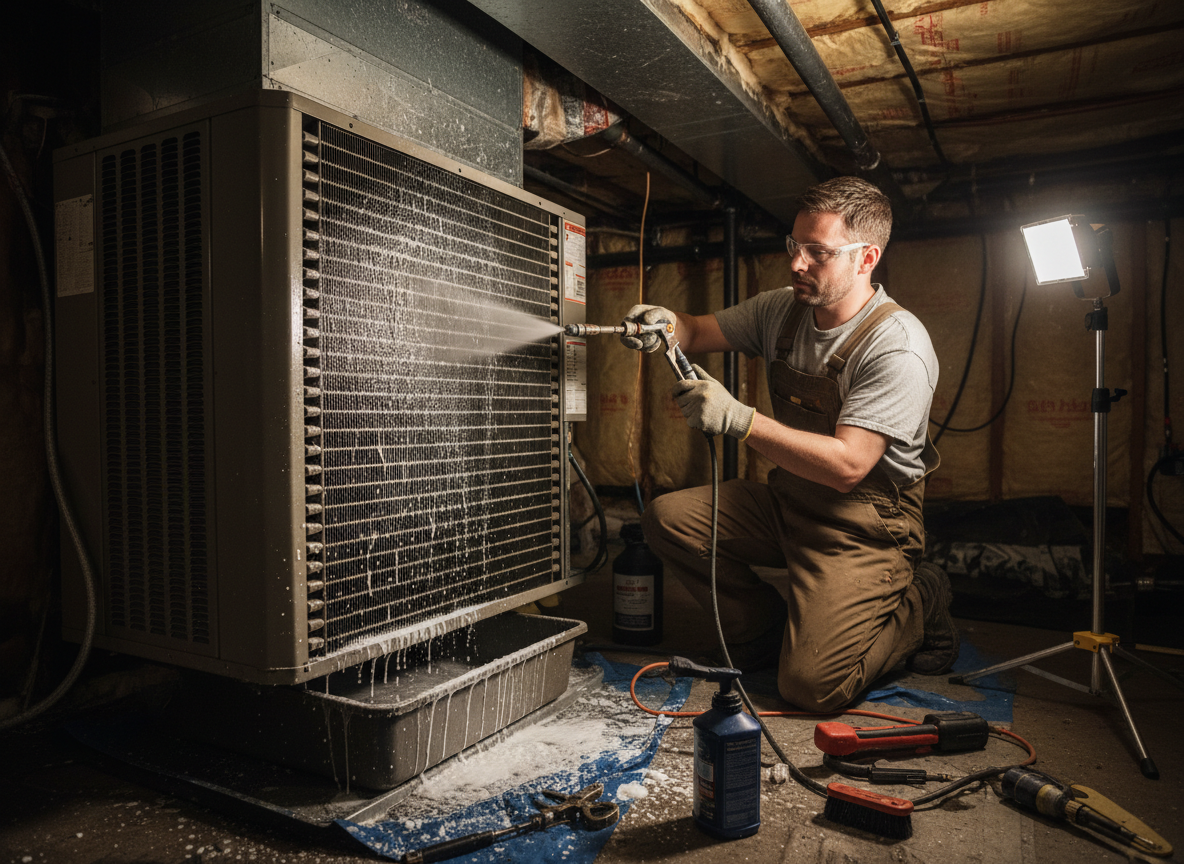
In Gresham homes built before the 1980s in Rockwood and near the Gresham Pioneer Cemetery, evaporator coils often collect thick layers of dust mixed with pollen that blows in from nearby Portland. Wet winters bring repeated condensation cycles that turn this buildup into a breeding ground for mold, forcing the system to run longer to maintain temperature. Technicians must pull the coil, apply no-rinse foaming cleaners rated for aluminum fins, and rinse with low-pressure water to avoid bending the delicate metal.
Flooding events common along the lower elevations of Multnomah County can push silt into outdoor condenser coils, especially on units set close to the ground in older Downtown properties. This restricts airflow and raises head pressure, shortening compressor life. Cleaning requires brushing the fins in the direction of the factory bend, followed by a biodegradable degreaser to break the oily film left by nearby road traffic.
Mt. Hood Community College campus buildings and surrounding neighborhoods show how mild summers still allow fine dust from construction to settle on coils during low-wind periods. Skipping annual coil cleaning here leads to higher energy use once the first cold snap arrives. Proper service includes checking the drain pan for standing water that can re-contaminate freshly cleaned coils within weeks.
Homeowners in Gresham often overlook the return-side coil on package units common in single-story Rockwood houses. Accessing these requires removing the blower compartment door and using mirrors to inspect for debris that has bypassed the filter during high-wind storms.
Technician insight
In Gresham, the thing that catches most people out with coil cleaning hvac is how wet winters push silt and pollen deep into the fins of condensers sitting low in Rockwood yards; homeowners think a quick rinse is enough, but without pulling the coil you miss the mud that stays wet for weeks and ruins the next season.
Rockwood Package Unit Coil
A single-story home near Rockwood had weak airflow after winter storms. We found the evaporator coil caked with silt that had entered through a damaged return. After removing the coil, cleaning both sides, and clearing the drain line, the temperature split returned to normal and the homeowner reported the system cycling less.
How it works
- 1
System Inspection
Technician examines coil condition, notes fin damage, and checks for water intrusion from recent Multnomah County flooding.
- 2
Access and Protection
Remove access panels, protect surrounding surfaces, and isolate electrical components before any cleaning begins.
- 3
Chemical Application
Apply coil-specific cleaner to both evaporator and condenser surfaces, allowing dwell time to loosen baked-on debris.
- 4
Rinse and Dry
Low-pressure rinse followed by compressed air to remove moisture that could promote mold during Gresham's wet season.
- 5
Reassembly and Test
Reinstall panels, restore power, and verify temperature split and airflow across the cleaned coils.
Pricing
Cost depends on unit accessibility, coil depth, and whether both indoor and outdoor coils require service.